Artificial Intelligence (AI) offers many benefits, but it also poses certain risks. AI is increasingly being used across all sectors that utilize information technologies and in everyday life.
Below, we outline some key areas that may present potential risks related to the implementation and development of AI technology:
Cybersecurity:
Hackers may attempt to take control of AI systems, alter input data, or manipulate algorithms to achieve undesired outcomes. AI operates on vast amounts of data, raising concerns about privacy breaches and data security.
Work Automation:
The introduction of advanced automation and robotics could lead to job losses in some sectors, which may result in social challenges.
Ethics and Discrimination:
There is a significant risk that AI training data, if biased, could lead to prejudiced AI outcomes and unfair decisions. Determining responsibility for damage caused by AI decisions is difficult. The complexity of some algorithms, such as neural networks, complicates understanding and transparency of their decision-making processes.
Military Applications:
The development of autonomous military systems based on AI could lead to uncontrolled escalation of conflicts.
Fake Information (Deepfakes) and Media Manipulation:
Deepfake technology can be used to create realistic-looking false content, increasing the risk of disinformation and public manipulation.
Given these risks, there is a need for appropriate regulations and ethical standards to help mitigate these dangers and ensure responsible AI development. International cooperation is crucial for developing effective solutions. Standard development can help unify practices and principles related to the creation, implementation, and management of AI technology.
ISO, the International Organization for Standardization, plays a key role in the development of such standards. As a result, the ISO technical committee has developed the first standard concerning Artificial Intelligence – ISO/IEC 42001, the AI Management System.
The First International Standard for Artificial Intelligence: ISO/IEC 42001:2023
The new ISO/IEC 42001 standard aims to assist any organization, regardless of its size, in the responsible use of AI systems.
Main Objectives of ISO/IEC 42001:
- Identifying and mitigating risks associated with AI implementation.
- Ensuring compliance with data protection regulations.
- Meeting stakeholder expectations during AI implementation.
- Building greater trust in AI systems by respecting ethical values.
Implementing an effective AI Management System (AIMS) brings many benefits that are crucial for business success.
Here are some of the key advantages:
Brand Strengthening:
Excellent AI practices can significantly improve a company’s image. Organizations that consistently apply best practices in AI are often viewed as leaders in their sectors, which enhances their brand strength.
Customer Loyalty:
A solid approach to AI management builds trust, leading to repeat transactions and positive word-of-mouth. Research shows that trust in a company's AI practices correlates with higher customer loyalty.
Attracting New Customers:
Maintaining high AI standards enhances brand reputation, attracting new customers.
Cost Savings:
An effective AIMS can reduce the number of AI-related incidents and speed up problem resolution when they occur. It can also prevent costly regulatory penalties associated with AI misuse, which translates to cost reductions, including lower insurance premiums.
Profit Growth:
The combination of a strong brand, customer loyalty, and cost efficiency directly leads to revenue growth. Companies that effectively use AI often experience steady growth.
Employee Morale:
Engaging employees in AI initiatives and demonstrating excellent practices in this area can increase job satisfaction and motivation.
In summary, robust AI management is not just a technical requirement but a strategic asset that impacts many aspects of business operations.
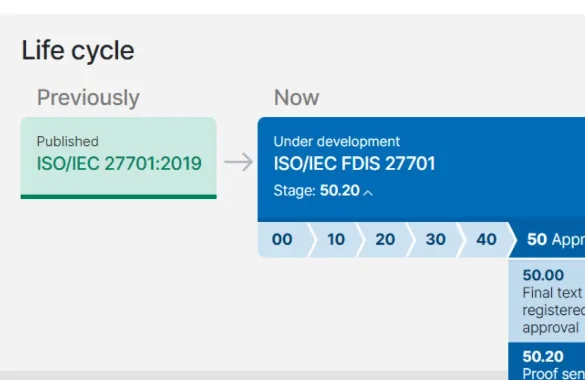
Current information about the status of the standard’s publication can be found on the ISO website. As of the writing of this article, the standard is marked as "under development."
ISO Standard Status